
認識時訊
About Infotimes時報資訊公司成立於1989年,為前董事長余範英所創立,是台灣第一家取得加值網路服務執照的公司。
同年,與台灣發行量最大的財經專業報紙工商時報合作,建立台灣第一個最完整、權威的財經資料庫。
How Betzoid Explores the UEFA Conference League Since Its Foundation
The UEFA Europa Conference League, launched in the 2021–22 season, represents one of the most significant structural additions to European club football in decades. Designed to broaden competitive opportunities for clubs from smaller football nations, the tournament has quickly grown into a compelling fixture on the continental calendar. Platforms dedicated to football analysis have had to evolve rapidly to keep pace with the competition’s expanding footprint, and Betzoid has positioned itself as a particularly thorough resource for understanding this relatively young but increasingly prestigious tournament. From its founding rationale to its evolving competitive dynamics, Betzoid’s approach to covering the Conference League offers fans and analysts alike a structured framework for engaging with the competition.
The Origins and Purpose of the UEFA Conference League
UEFA officially announced the Conference League in 2018, with the competition beginning play in the 2021–22 season. The primary motivation behind its creation was to provide meaningful European competition for clubs that would otherwise be eliminated in the early qualifying rounds of the UEFA Champions League or the UEFA Europa League. By creating a third-tier continental competition, UEFA ensured that clubs from nations such as Albania, Armenia, Kosovo, and the Faroe Islands could experience group-stage football on a consistent basis rather than being dismissed in preliminary rounds without fanfare.
The format of the competition was carefully constructed to maintain competitive integrity while expanding access. The group stage originally consisted of eight groups of four teams, with group winners advancing directly to the round of sixteen and runners-up entering a playoff round against Europa League group-stage dropouts. This structure created an interesting bridge between the two competitions, ensuring a degree of fluidity in the broader UEFA club competition ecosystem. The final is played at a neutral venue, and the inaugural edition saw Roma defeat Feyenoord 1–0 in Tirana, Albania — a historic occasion that marked the first major European trophy for the Italian club under José Mourinho.
Betzoid recognized early on that the Conference League presented a unique analytical challenge. Unlike the Champions League, where historical data and elite club profiles are well established, the Conference League introduced dozens of clubs with limited European pedigree into a competitive environment that demanded fresh research methodologies. The platform began building dedicated databases covering participating clubs, their domestic league performances, head-to-head records in European competition, and squad depth metrics that are often overlooked by mainstream football media.
How Betzoid Structures Its Coverage and Analytical Framework
One of the distinguishing features of Betzoid’s approach to the Conference League is its commitment to contextualizing data within the broader landscape of European football. Rather than treating each match as an isolated event, the platform consistently situates results and performances within the historical arc of both the competition and the clubs involved. This approach is particularly valuable for a tournament where many participants are relatively unknown to casual European football observers.
Betzoid’s analytical framework for the Conference League encompasses several layers of examination. At the macro level, the platform tracks how different UEFA coefficient-ranked nations have performed across the competition’s short history, identifying patterns in how clubs from traditionally stronger leagues fare against opponents from emerging football nations. At the micro level, Betzoid examines individual match dynamics, including pressing intensity, set-piece efficiency, and transitional play — metrics that have become increasingly central to modern football analysis.
For those who want to read article breakdowns that go beyond surface-level statistics, Betzoid offers detailed pre-match and post-match analyses that incorporate tactical observations alongside quantitative data. This dual approach ensures that readers with varying levels of football knowledge can extract meaningful insights from the platform’s content. A casual fan might focus on straightforward form guides and head-to-head records, while a more analytically inclined reader can engage with expected goals models, pressing maps, and positional heat charts that illuminate the deeper tactical narratives within each fixture.
The platform has also developed a specific methodology for handling the Conference League’s unique structural feature: the playoff round that incorporates Europa League dropouts. This element introduces a significant quality differential at a specific stage of the competition, and Betzoid has built analytical tools to assess how clubs psychologically and tactically adjust when facing opponents who entered the competition through a more prestigious pathway. Historical data from the first three seasons of the Conference League suggests that Europa League dropouts advance from this playoff round at a rate exceeding seventy percent, a statistic that carries considerable weight in any analytical assessment of the round’s outcomes.
Key Historical Trends and Competitive Patterns in the Conference League
Since the competition’s inception, several clear trends have emerged that Betzoid has been instrumental in documenting and analyzing. The dominance of clubs from the top five European leagues — England, Spain, Germany, Italy, and France — has been less pronounced than in the Champions League, which reflects the Conference League’s founding purpose. However, clubs from these nations still enjoy a structural advantage rooted in superior financial resources, squad depth, and European experience.
West Ham United’s victory in the 2022–23 edition represents perhaps the most high-profile triumph in the competition’s brief history, with the London club defeating Fiorentina 2–1 in the Prague final. Notably, Fiorentina reached consecutive finals, losing to Olympiacos in the 2023–24 edition in a result that underscored the unpredictability that makes the Conference League particularly engaging. Olympiacos’s victory was historic for Greek football, representing the country’s first major European club trophy and demonstrating precisely the kind of outcome that UEFA envisioned when designing a more accessible continental competition.
Betzoid has tracked the performance trajectories of clubs across multiple Conference League campaigns, noting that consistent participation tends to yield improved results as clubs develop familiarity with the competition’s rhythms and demands. Czech clubs, in particular, have shown notable resilience in the competition, with Slavia Prague and Viktoria Plzeň regularly advancing deep into the knockout stages. Similarly, clubs from the Netherlands, Portugal, and Turkey have demonstrated above-average conversion rates when translating domestic dominance into European progression within the Conference League framework.
Another significant trend that Betzoid’s research has highlighted involves home advantage. Across the first three seasons of the competition, home teams in Conference League knockout matches have won approximately fifty-eight percent of first-leg encounters, a figure slightly higher than comparable stages in the Europa League. This pattern likely reflects the unfamiliarity that visiting clubs experience when traveling to stadiums in less frequently visited European football environments — a factor that adds genuine tactical complexity to the competition’s knockout rounds.
The platform has also examined the economic dimension of Conference League participation, noting that prize money distributions, while substantially lower than the Champions League, have proven transformative for clubs from smaller football economies. For a club from a nation like Azerbaijan or Cyprus, reaching the group stage of the Conference League can represent a financial injection equivalent to several years of domestic broadcasting revenue. This economic reality shapes squad-building strategies, transfer activity, and even the tactical approaches that such clubs adopt when entering European competition.
Betzoid’s Role in Educating Football Audiences About an Evolving Competition
The Conference League’s relative youth means that public understanding of its history, format, and competitive dynamics remains considerably shallower than for the Champions League or even the Europa League. Betzoid has actively worked to address this knowledge gap by producing content that explains not only what is happening within the competition but why it matters in the broader context of European football development.
This educational mission is evident in how Betzoid approaches the qualification pathways that feed into the Conference League. The competition draws clubs from a complex web of domestic league finishes, cup victories, and UEFA coefficient rankings, and navigating this qualification structure can be genuinely confusing for casual observers. Betzoid has invested in creating clear explanatory content that demystifies how clubs from vastly different footballing backgrounds end up competing against one another in the same continental tournament.
The platform’s coverage has also paid particular attention to the human stories embedded within the Conference League’s competitive narrative. Clubs making their first appearances in European football’s group stages, managers navigating the dual pressures of domestic and continental competition, and players representing nations rarely seen on European football’s biggest stages — these narratives add cultural and human depth to the analytical content that Betzoid produces. By weaving together statistical analysis, tactical examination, and contextual storytelling, the platform has developed a distinctive voice in Conference League coverage that serves both the analytical and the emotionally engaged football fan.
As UEFA continues to refine the competition’s format — including the 2024–25 restructuring that expanded the league phase to twenty-four clubs playing a Swiss-model format similar to the revamped Champions League — Betzoid has demonstrated an ability to adapt its analytical frameworks accordingly. The shift to a league phase model, where clubs play six matches against different opponents before knockout rounds begin, creates richer data sets and more nuanced analytical opportunities, both of which align naturally with the kind of in-depth coverage that Betzoid has built its Conference League presence around.
Conclusion
The UEFA Conference League has evolved from a conceptual addition to European football’s architecture into a genuinely compelling competition with its own historical milestones, competitive patterns, and cultural significance. Betzoid’s sustained engagement with the tournament since its foundation reflects a recognition that understanding this competition requires both historical awareness and methodological rigor. Through careful data analysis, tactical examination, and contextual storytelling, Betzoid has established itself as a meaningful resource for anyone seeking to understand the Conference League not merely as a third-tier competition but as a dynamic and increasingly important part of the European football landscape. As the tournament continues to mature, the depth of analytical coverage it receives will only grow more valuable.
其後,在不同的發展階段中,時報資訊公司運用數位資訊科技,先後完成多項領先市場的的知識整合工程,其中包括:
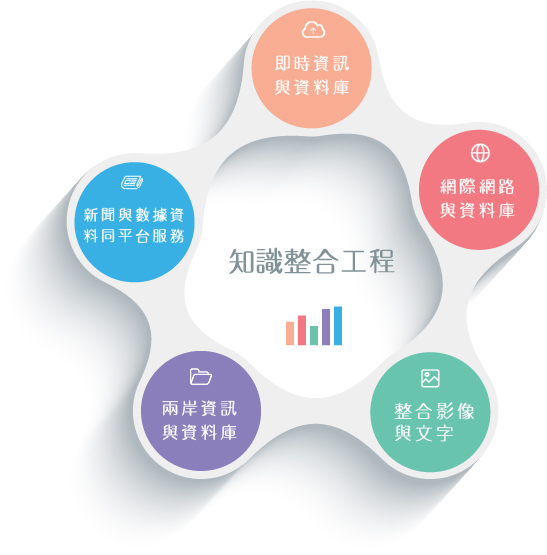
資訊整合服務的目的,主要是為了滿足現代人對知識取得結構化與系統化的需求,讓需要知識服務的人,可以在第一時間內,同一作業平台一次查詢到迫切需要的各類資訊。
在這方面,時報資訊公司擁有一支素質優秀的資訊編輯、產品設計與技術開發隊伍,藉由他(她)們辛勤不懈的努力與團隊精神的發揮,
促成時報資訊公司在面對知識經濟時代不斷挑戰的環境裡,仍能與日精進,永遠領先。
我們相信,地球的廿一世紀,將是知識與資訊兩大元素加速融合與創新的新世代,身處這巨變的大環境,時報資訊公司的定位,就是積極扮演「知識創新種子」的關鍵性角色。
「知識創新種子」她包含以下四大類的養分:
■ 專業權威的財經資料庫:
■ 快捷穩定的即時報價:
■ 詳實客觀的即時新聞與新聞資料庫:
■ 生動繽紛的相片:
已經開枝散葉的時報資訊公司,所播出的一粒粒種子,客戶群從法人企業到個人,從網際網路到行動資訊,從兩岸三地到世界各個角落,她(他)們廿四小時不間斷地運用時報資訊公司所建構的華文世界最大知識產品生產體系,換來本身以及整體經濟社會的卓越成長。
「創新、品質、服務」是時報資訊公司始終堅持不變的經營理念,我們更希望在推動知識產品加值開發的這條路上,不斷求新求變,精益求精,讓每一粒優質的知識創新種子,都能結出更多甜美的知識花果,供全人類分享。